Include vaping in the Taiwan–U.S. Reciprocal Trade Agreement: Regulate to End the Black Market—Don’t Let Prohibition Create Health Risks
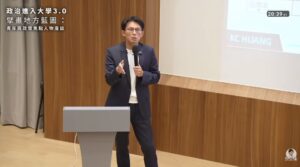
By Yu-Yang Wang, Tobacco Harm Reduction Expert
Taiwan’s Executive Yuan has stated that the Taiwan–U.S. Reciprocal Trade Agreement (ART) will cover multiple dimensions, including tariff reductions, non-tariff trade barriers, trade facilitation, economic security, labor protections, and environmental protection. It has also emphasized that tariff cuts will prioritize products that Taiwan does not produce domestically, that have no substitutes, that are complementary to local industries, and that can help reduce import costs. For non-tariff barriers, the government says it will adhere to “scientific evidence, international norms, and regulatory transparency.” In pharmaceutical review procedures, it seeks to streamline approvals for public health benefits, while insisting it will not retreat from core safety standards.
If these principles are to be taken seriously, the government cannot continue to avoid an area that is already out of control in Taiwan and is highly connected to U.S. standards and market realities: cross-border governance and regulatory alignment for new-generation nicotine products (including e-cigarettes and nicotine pouches and other tobacco alternatives). I argue that e-cigarette regulation should be included in ART’s negotiation agenda and its subsequent annex framework—and that this position fully aligns with the government’s own stated principles.
1) E-cigarettes are not a moral question of “whether people should vape,” but a governance question of black markets and product safety
Taiwan’s current situation is this: blanket bans and ambiguous rules have not eliminated demand; they have pushed the market underground. The most dangerous part of an underground market is not whether products exist—it is that you have no idea what is inside them: unknown sources, unknown ingredients, unknown concentrations, and no consistent testing or traceability. The result is a dual cost to public health and public order, and it has even contributed to Taiwan being flooded with illegally smuggled, over-purchased e-cigarettes from mainland China.
If ART truly aims to address “non-tariff trade barriers” and “regulatory transparency,” the priority should not be another round of slogans. It should be to put concrete issues on the table and settle them clearly: product standards, testing methods, labeling rules, traceability systems, enforcement checks, and border management. This creates a legitimate and compliant pathway—and allows enforcement to focus on the real violations: smuggling, counterfeits, youth sales, and illegal additives.
2) Standards must be negotiated on “scientific evidence and international norms,” so Taiwan no longer bears risk through regulatory vagueness
The Executive Yuan emphasizes that negotiations will follow scientific evidence and international trade rules. That means e-cigarette governance must return to technical documentation that is testable, enforceable, and accountable, including:
- Standards for ingredient and emissions testing (transparent, reproducible methods)
- Caps on nicotine concentration and volume, packaging warnings, and full ingredient disclosure
- Child-resistant packaging, leak prevention, battery safety, and charging safety
- Manufacturing quality management (GMP/quality systems) and batch-level traceability
- Strict age verification and channel accountability (youth prevention is the absolute baseline)
These measures are not “liberalization” or “indulgence.” They do the opposite: they pull risk back from the black market into the rule of law and evidence-based regulation. More importantly, these technical standards and procedures are exactly where ART’s goals—“regulatory transparency” and “trade facilitation”—can be most effective: reducing uncertainty to the minimum and giving both regulators and compliant businesses clear rules to follow.
3) Use ART’s “trade facilitation” and “economic security” logic to counter smuggling and supply-chain risks
One of Taiwan’s biggest e-cigarette problems is that smuggling and underground supply chains are highly fragmented, hard to trace, expensive to police, and yet the risks spread into schools and communities. If ART is serious about trade facilitation and economic security, it should build a more effective framework for customs-information cooperation, risk-based classification, and source traceability:
- Compliant products follow transparent, auditable procedures;
- Illegal products are targeted through more precise risk models;
- Enforcement resources are concentrated where they matter most, reducing symbolic “small catches” that miss the real networks.
This approach strengthens national security and public order—and fits the language the U.S. commonly uses for supply-chain governance and enforcement cooperation.
4) Excluding e-cigarettes from ART is the real “black-box risk”
Public distrust today is not caused by negotiation itself. It is caused by a pattern in which governments place sensitive issues into an invisible drawer. If e-cigarettes are not included in ART’s standards and annex discussions, Taiwan risks exactly that pattern: one set of promises abroad, another set of rules at home, inconsistent enforcement, and an ever-growing black market. The people who pay the price will not be officials; it will be parents, teachers, frontline inspectors, and consumers harmed by unknown products.
My proposal: Three concrete pathways to write “new nicotine product governance” into ART
- Create a technical working group to fully standardize and make transparent: product standards, testing, labeling, traceability, and age verification.
- Include an annex/chapter on non-tariff barriers and regulatory standards coordination so rules become predictable, auditable, and enforceable.
- Build a joint border–market defense framework for stronger cooperation and information exchange against smuggling, counterfeits, and youth sales.
Let me emphasize again: including e-cigarette governance in ART is not an endorsement of any industry, nor is it “letting products run free.” It is a way to make Taiwan genuinely deliver on the principles it has publicly declared—scientific evidence, international norms, regulatory transparency, and zero retreat on core safety standards.
If ART is to become a model of “reciprocity” and “modern governance,” it should start with the issue most prone to black markets and most in need of transparent standards: bring e-cigarettes back into the sunlight, replace black boxes with institutions, and end underground risk with science.
Further Reading
- “Cheng Li-jun leads delegation to Washington; Taiwan–U.S. trade agreement clearer on the 12th”
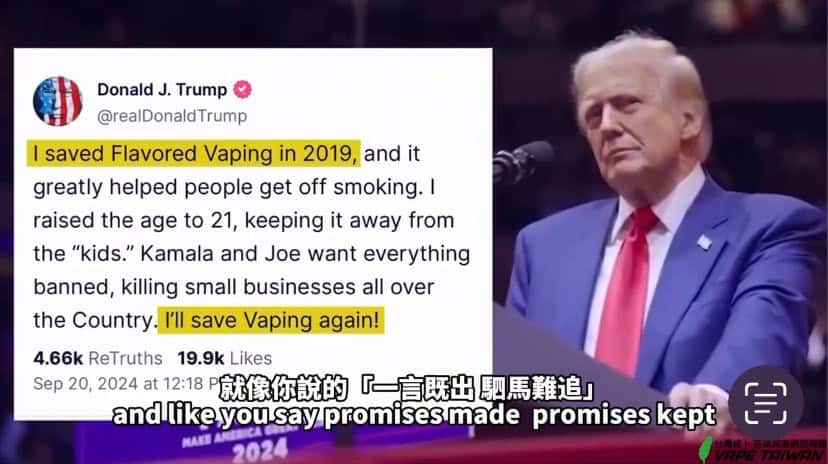
https://www.capitalfutures.com.tw/zh-tw/financial/globalarticle?contentid=c26021000304&category=all - “Campaigning for votes! Harris appears with Oprah and reveals she owns a gun; Trump says ‘Save vaping’”
https://news.ttv.com.tw/news/11309210000300W - “Trump holds White House vaping hearing; ‘Made-in-China’ illegal e-cigarettes become the main target”
https://www.cmmedia.com.tw/home/articles/18733 - “Trump White House vaping hearing; Wang Yu-Yang: President Tsai Ing-wen does not intervene?”
https://www.peopo.org/news/489663 - Derek Yach op-ed: “Public health’s original sin: vaccines, e-cigarettes, and the battle for trust”
https://vapetaiwan-media.com/news/derek-yach-public-healths-original-sin-vaccines-vapes-battle-for-trust/ - Derek Yach on WHO’s future: “Trump’s exit and a new director-general as a harm-reduction opportunity”
https://vapetaiwan-media.com/news/derek-yach%E5%8D%9A%E5%A3%AB%E8%AB%87%E4%B8%96%E8%A1%9B%E6%9C%AA%E4%BE%86%E5%B7%9D%E6%99%AE%E9%80%80%E5%87%BA%E5%B0%8E%E8%87%B4%E8%B2%A1%E5%8B%99%E5%9B%B0%E5%A2%83%E8%88%87%E6%96%B0%E7%B8%BD%E5%B9%B9/ - “A shocking confession from a former WHO senior official: five truths about anti-smoking you didn’t know”
https://vapetaiwan-media.com/news/%E4%B8%96%E7%95%8C%E8%A1%9B%E7%94%9F%E7%B5%84%E7%B9%94%E5%89%8D%E9%AB%98%E5%B1%A4%E7%9A%84%E9%9C%87%E6%92%BC%E5%91%8A%E7%99%BD%E9%97%9C%E6%96%BC%E5%8F%8D%E8%8F%B8%E4%BD%A0%E4%B8%8D%E7%9F%A5%E9%81%93/
Statement: “Former WHO Deputy Director-General Dr. Derek Yach: E-cigarettes are a healthier alternative (than cigarettes).”