Tobacco Harm Reduction Advocate Barred from Conference Danny Wang Slams Taiwan’s Health Ministry for “Another Black-Box Operation”
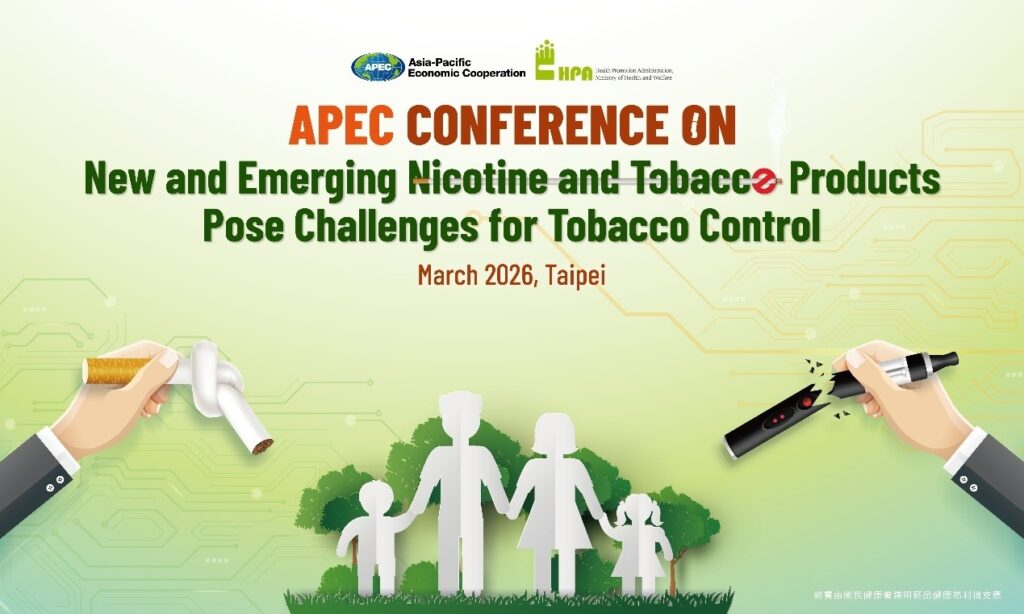
APEC新尼古丁及菸草產品之菸害防制挑戰國際研討會。圖:擷取自衛生福利部國民健康署。
Taipei, Taiwan— The “APEC Conference on New and Emerging Nicotine and Tobacco Products Pose Challenges for Tobacco Control,” organized by agencies under Taiwan’s Ministry of Health and Welfare (MOHW), is scheduled to take place on March 25 at the Chang Yung-Fa Foundation International Convention Center in Taipei. However, Danny Yu-Yang Wang, a WHO-certified tobacco harm reduction expert and long-time advocate of Tobacco Harm Reduction (THR) policies, says he has been denied participation by the organizers, accusing the ministry of once again using “industry affiliation clauses” to exclude dissenting voices and create what he described as a black-box, one-sided policy forum.
Wang noted that while the conference registration information claims the event is open to the general public, it also includes restrictive provisions stating that “any individual affiliated with tobacco or e-cigarette companies, industry consultants, or lobbyists is prohibited from attending.” According to Wang, the clause is being used in practice to exclude tobacco harm reduction advocates who hold views different from those of the government, effectively leaving only one perspective represented at an official policy discussion.
Wang emphasized that his work focuses on promoting the concept of tobacco harm reduction explicitly mentioned in the World Health Organization’s Framework Convention on Tobacco Control (FCTC). The approach seeks to reduce health risks associated with smoking by lowering exposure to harmful tobacco smoke and encouraging less harmful alternatives, ultimately working toward a “Smokefree Taiwan” public health goal. He argued that Taiwan’s tobacco control policy environment has increasingly become exclusionary, with authorities unwilling to engage in dialogue with experts holding different perspectives and instead blocking them from official meetings altogether.
Wang further criticized the Democratic Progressive Party (DPP) government, stating that during its decade in power from 2016 to 2025, Taiwan collected nearly NT$300 billion (approximately US$9 billion) in Tobacco Health and Welfare Surcharges—commonly known as the tobacco surcharge. Despite the enormous revenue generated, Wang questioned the transparency and effectiveness of how these funds have been used.
“While the government continues to collect massive tobacco surcharges, it refuses to allocate those funds to practical measures such as building designated smoking facilities or allowing public oversight,” Wang said. “When those who seek to monitor tobacco control policies are excluded from policy discussions, can such conferences still be called public policy forums? This is nothing more than a black-box echo chamber.”
Wang also named the John Tung Foundation, a long-time anti-smoking advocacy organization in Taiwan, questioning its close relationship with government agencies. He pointed out that the foundation has frequently received government contracts and funding to organize anti-smoking campaigns such as the well-known “Quit & Win” program. In Wang’s view, the close partnership between certain civil society organizations and government agencies has led to a situation in which a small number of groups dominate tobacco control policy discussions.
“This concentration of influence risks crowding out diverse perspectives and raises legitimate concerns about the transparency of how tobacco surcharge funds are used,” Wang said.
“After collecting nearly NT$300 billion in tobacco surcharges over the past decade, the government still refuses to allow participation from those with different policy views. This is not just a policy issue—it is a problem of democratic oversight,” he added.
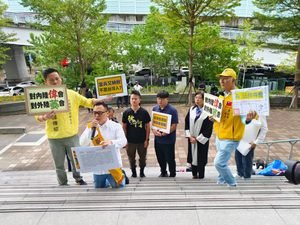
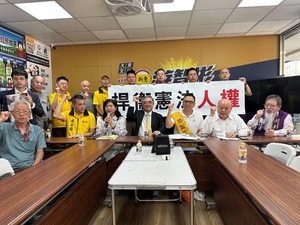
Wang also noted that civil society groups have recently established the Civil Oversight Alliance for Tobacco Health and Welfare Surcharges, aimed at strengthening independent monitoring of how tobacco surcharge funds are spent. The alliance plans to work with experts, legal professionals, and public advocates to push for greater transparency and accountability in tobacco control policy.
He called on the government to ensure that future policy forums allow participation from a broad range of stakeholders and viewpoints, arguing that only through open dialogue can Taiwan improve the quality, transparency, and credibility of its public health policymaking.
Related Background
A similar incident occurred on October 15, 2018, when Danny Wang was reportedly blocked from attending a tobacco control symposium organized by Taiwan’s Health Promotion Administration at Fu Jen Catholic University, despite having completed the registration process.
Video reference:
https://www.youtube.com/shorts/9tnrWyk8v-Y
The 2026 APEC Conference on New and Emerging Nicotine and Tobacco Products Pose Challenges for Tobacco Control is funded by the Tobacco Health and Welfare Surcharge administered by the Health Promotion Administration under the Ministry of Health and Welfare.
Further Reading
PTT discussion thread:
https://www.ptt.cc/bbs/Gossiping/M.1773542603.A.B45.html
Conference information:
https://www.hpa.gov.tw/Pages/List.aspx?nodeid=5040
https://www.2026apechpa.org/
Opinion article by Danny Wang:
https://www.storm.mg/article/4879143
PeoPo report on tobacco control legislative controversies:
https://www.peopo.org/news/479424
Public policy proposal regarding tobacco surcharge oversight:
https://join.gov.tw/idea/detail/a89af5b3-ce6a-405a-a6f1-03bc334c7983
MOHW clarification regarding “black-box review” allegations:
https://www.mohw.gov.tw/fp-17-75133-1.html
Related commentary:
https://www.storm.mg/article/543415#wholePage
https://www.upmedia.mg/tw/commentary/culture-and-education/253786